One step further in understanding the blue sharks of the Azores
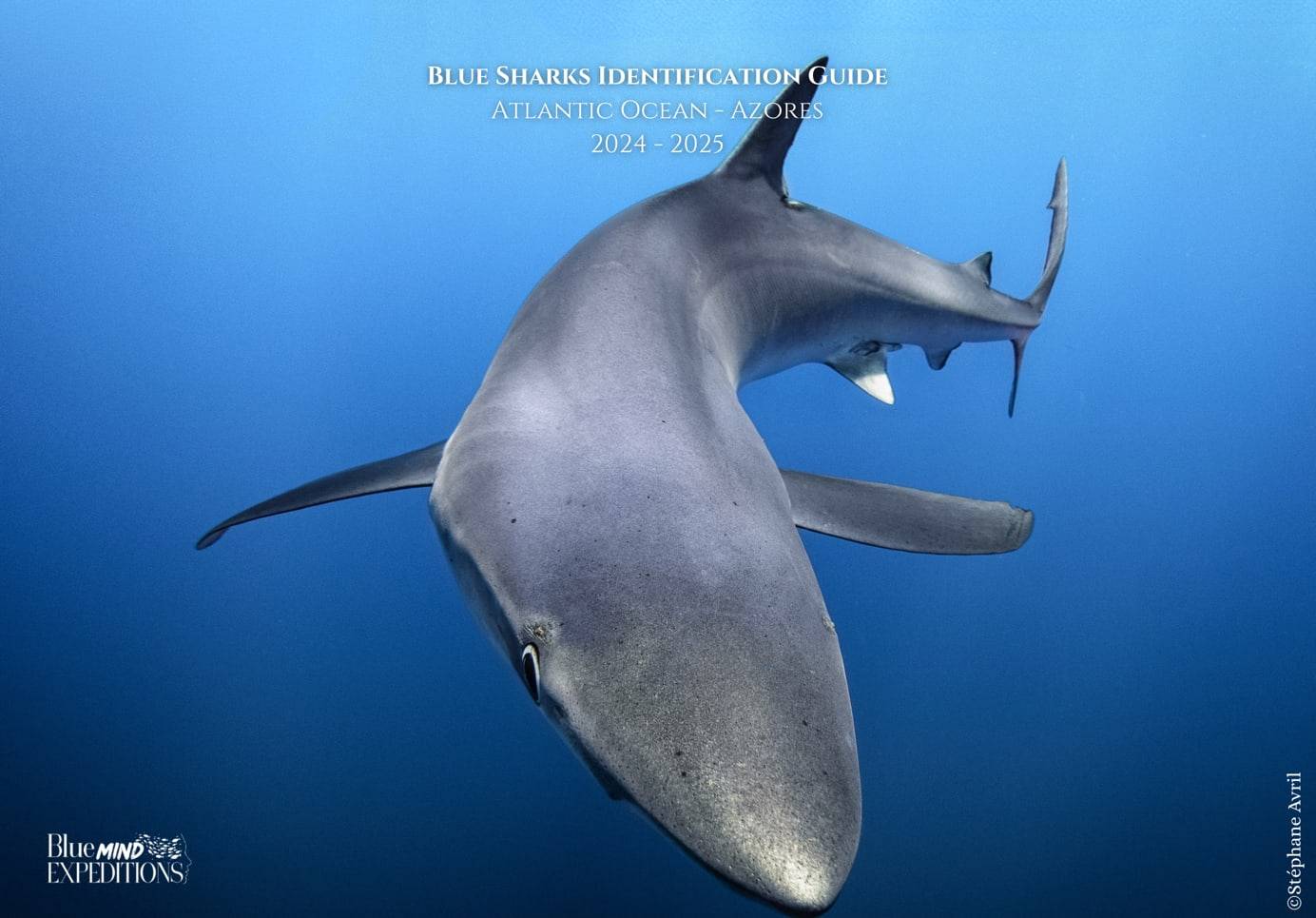
The summer of 2024 saw the launch of the first citizen-science workshops in the Azores, an initiative aimed at better understanding and tracking the blue sharks that live in these waters. Thanks to the involvement of every diver, those expeditions gathered essential data and led to a one-of-a-kind identification guide, the fruit of our work in the field.
The guide lists the blue sharks we met, detailing their distinctive marks and individual features, so we can better understand their movements and their fidelity to dive sites over the years. Yet to this day, no standardised method exists for identifying blue sharks. That is exactly what we are trying to change.
Towards a repeatable identification protocol
I work with Andrea Herreira, a Master’s student, to develop a reliable and repeatable identification protocol. Her research — the subject of her thesis — aims to establish a method for identifying individuals rigorously. Its results could lay the foundations of a scientific reference that does not yet exist for this species.
The workshops also benefited from a major technological step forward thanks to Okeanos, who let us use laser photogrammetry in 2024. The method measures the size of sharks precisely without touching or disturbing them: a laser beam projected underwater creates a visual reference, and the exact dimensions of each individual are then worked out from the images. With Aurélien Hubac, we worked on building a new laser rig for the seasons that followed.
All the data is gathered and studied by Andrea, a group of young scientists and myself, contributing directly to scientific research and to a better understanding of the blue sharks of the Azores. It was also essential in building this identification guide, the first stone in the long-term monitoring of these pelagic predators.
A second season of workshops
After the success of the first edition, the citizen-science workshops came back in 2025 for a second season, with two week-long sessions in August — both fully booked. These workshops show what citizen science can do: by being there in the field, we contribute directly to research and to the protection of these animals.