The first participatory science workshop dedicated to the thresher shark
In June 2026, I’m launching the first edition of an immersive diving holiday dedicated to the thresher shark, in the mythical location of Malapascua, in the Philippines.
This exceptional diving holiday takes you to Malapascua, in the Philippines, the only place in the world where you can observe the pelagic thresher shark all day long. Between underwater exploration, participatory science and encounters with local communities, enjoy a unique experience combining adventure, immersion and marine conservation.
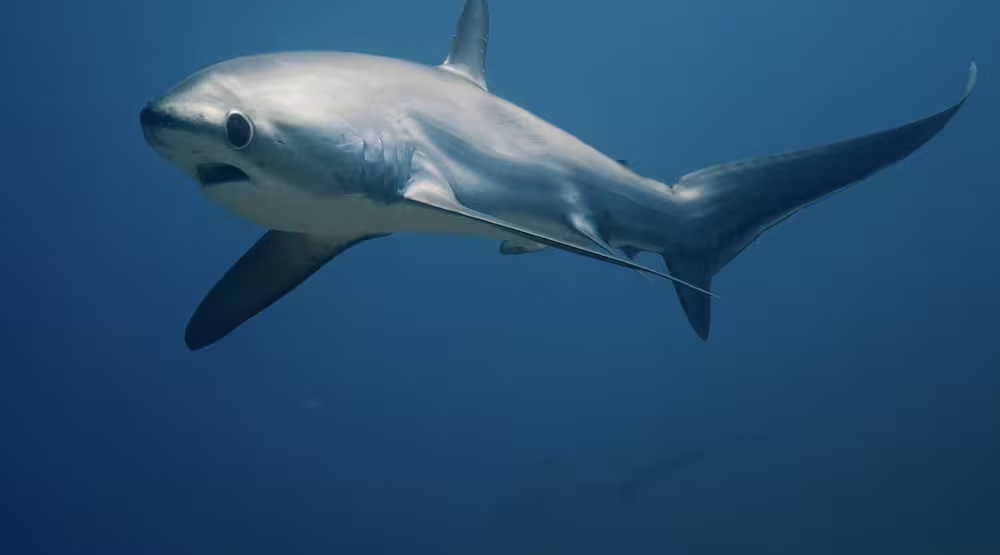
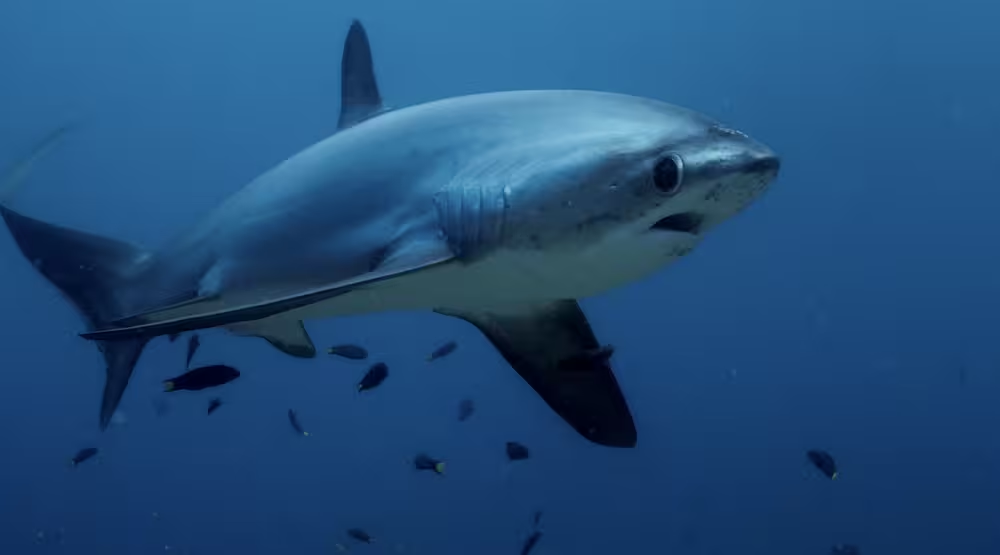
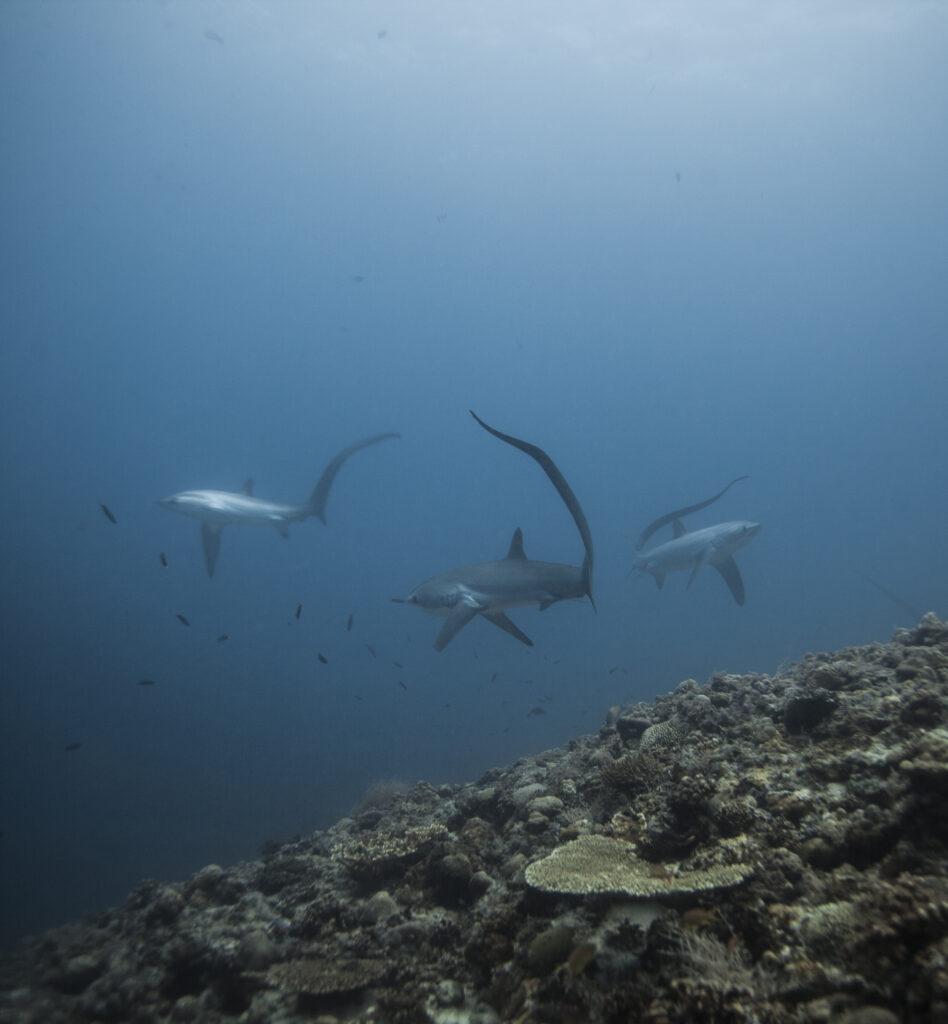
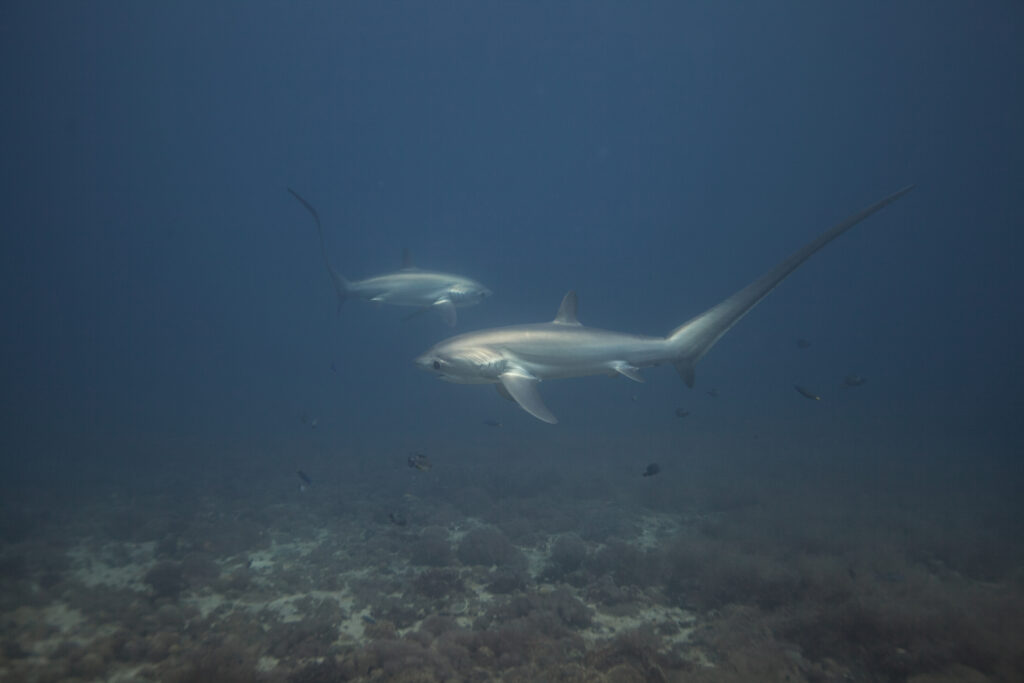
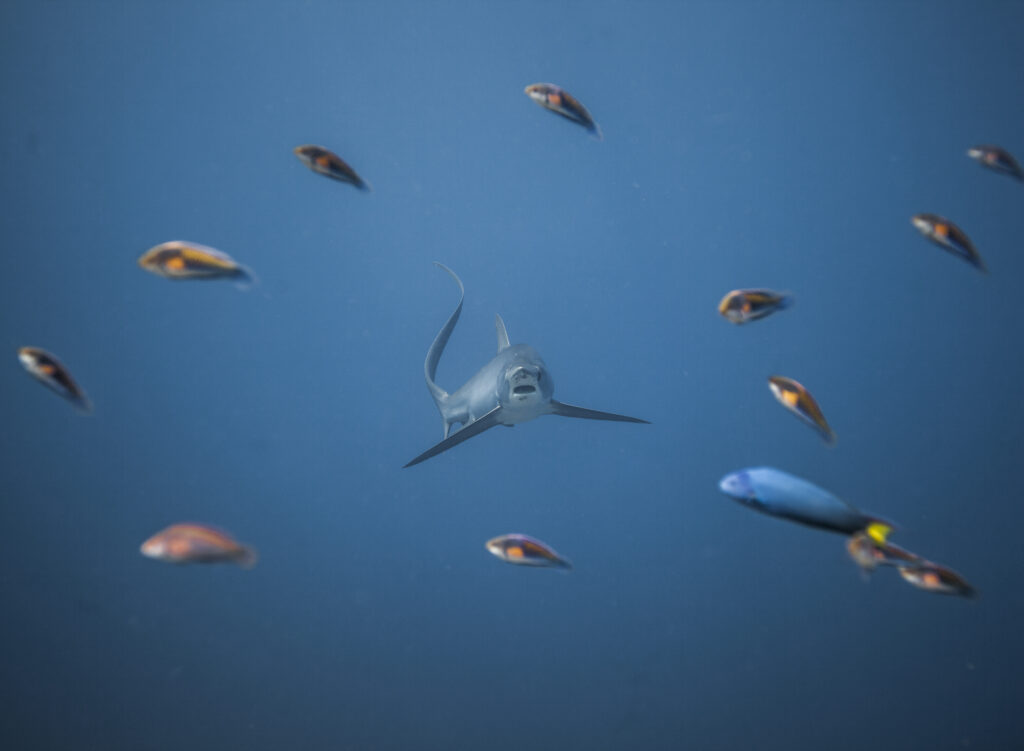
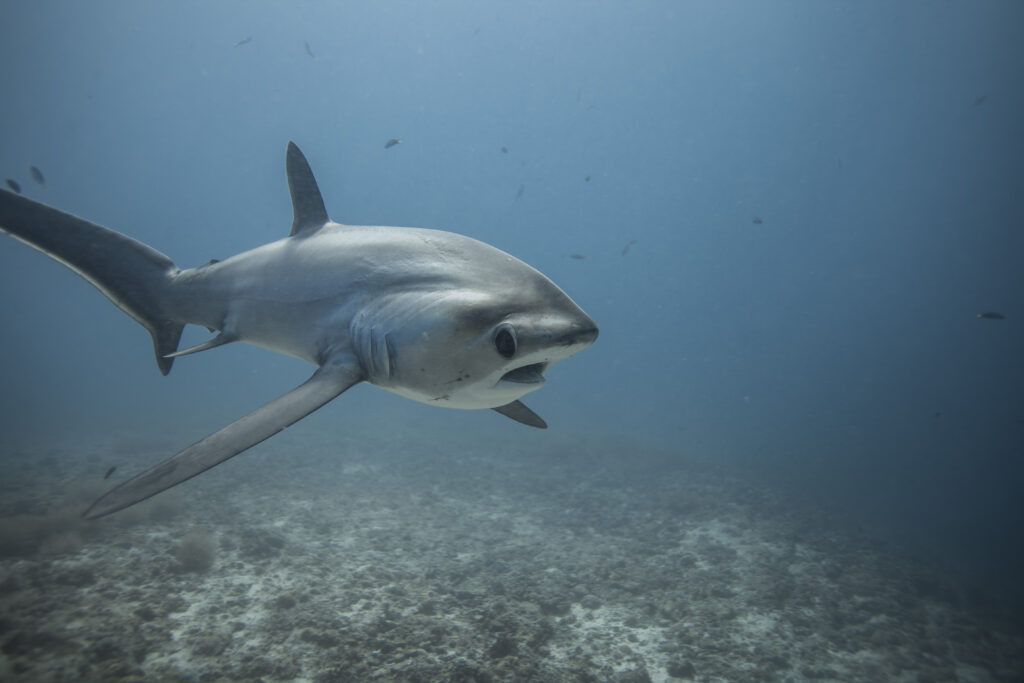
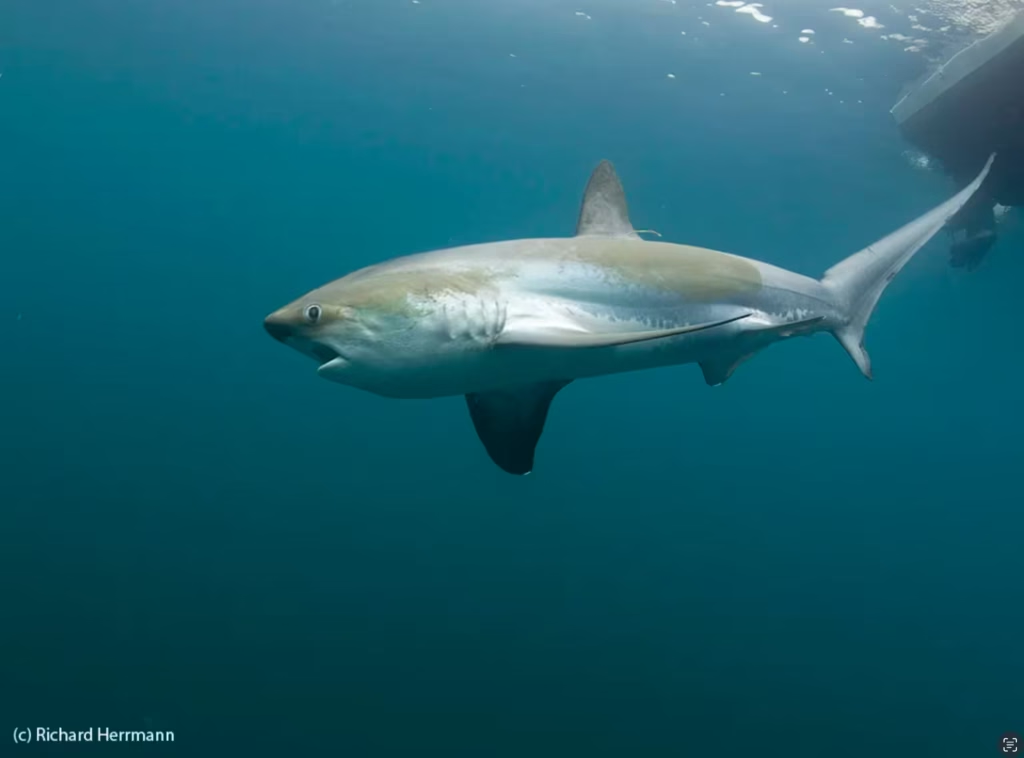
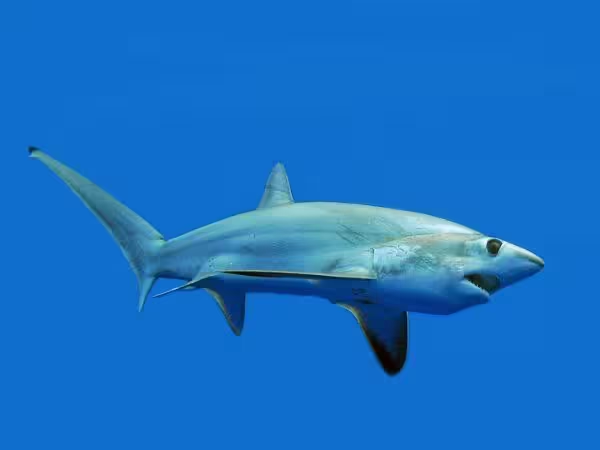
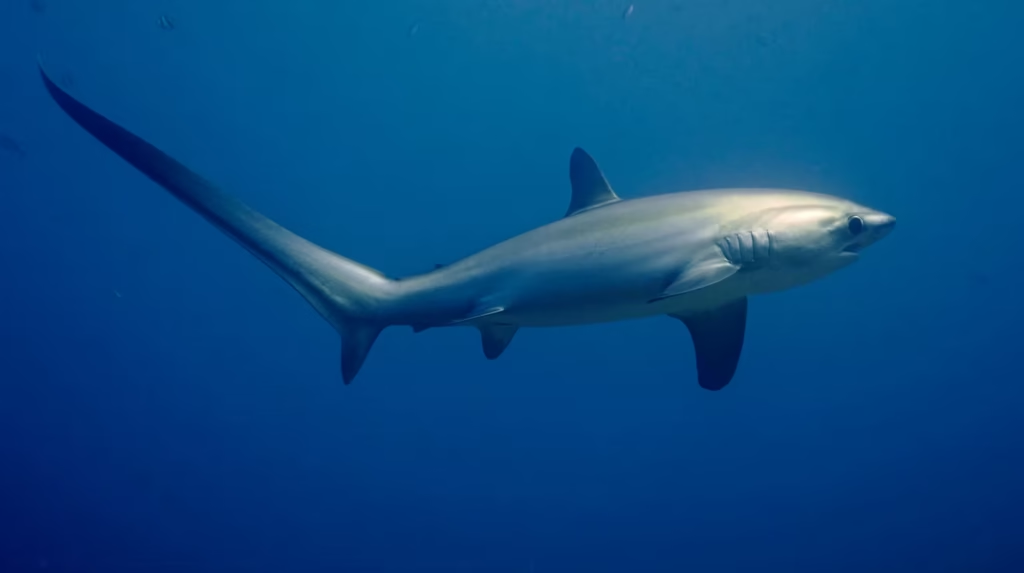
The dives will enable you to observe the pelagic thresher shark(Alopias pelagicus) in unique conditions: all day long, between 0 and 30 meters depth. These slender silhouettes appear on the plateau, are cleaned by wrasse and can sometimes leap to the surface – a rare and breathtaking spectacle.
This trip is much more than an underwater adventure: it’s a total immersion in the world of marine biology, a way of supporting local communities whose lives depend on sustainable tourism linked to this emblematic shark, and an unforgettable human experience where every dive takes on real meaning.
7 nights at Hotel Ocean Vida Beach Resort (shared double room) breakfast included
18 dives
10 days 7 nights
What’s included
Pick-up and return Cebu/Malapascua airport transfers
Accommodation in a double room at the Ocean Vida Beach Resort, including breakfast (8 days/7 nights)
18 dives (3 dives per day)
12L AIR aluminum blocks.
Lead sinkers and belts
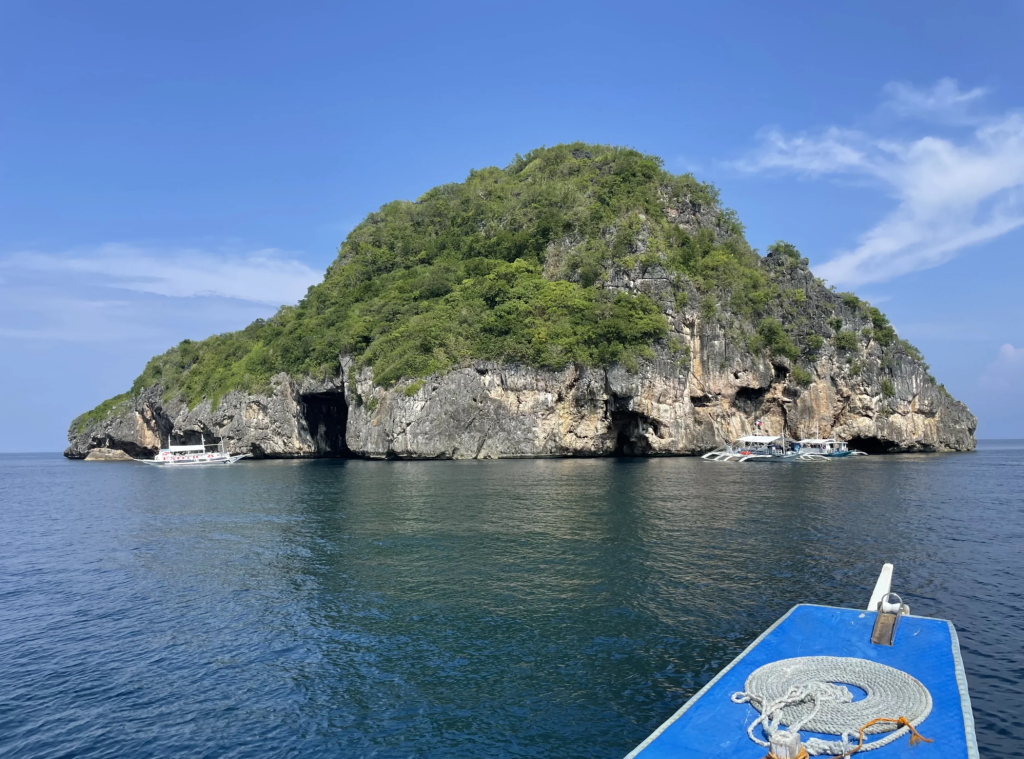
1 day at Gato Island or Capitancillo or Kalanggaman with 3 scheduled dives
1 BBQ for lunch at Gato Island or Capitancillo or Kalanggaman
Snacks, coffee and tea on board
Local guides
2 naturalist guides
Lectures on the thresher shark, participatory science, photo-identification, laser photogrammetry
Shark identification workshops
1 professional videographer to immortalize the experience
What’s not included
International flights (Emirates, Eva Air, Turkish Airlines) must be booked in advance to be insured.
Possible increases in air taxes
Cancellation and assistance insurance (recommended)
Diving insurance (mandatory)
Meals not mentioned
Diving equipment rental
Single room
Tips for guides and skippers (approx. €30/person for the week)
Other personal expenses
This diving holiday in Malapascua is aimed at experienced divers who want to experience a unique adventure with thresher sharks, while taking an active part in a scientific project committed to protecting the oceans.
Bangka (traditional Filipino boat) privatized for the group. Up to 12 divers.
Water temperature: 27°C-31°C Air temperature: 27°C-30°C
5 mm integral suit Dark colors
Level II CMAS / FFESSM Advanced Open Water Diver with 50 dives minimum
Your expedition guides
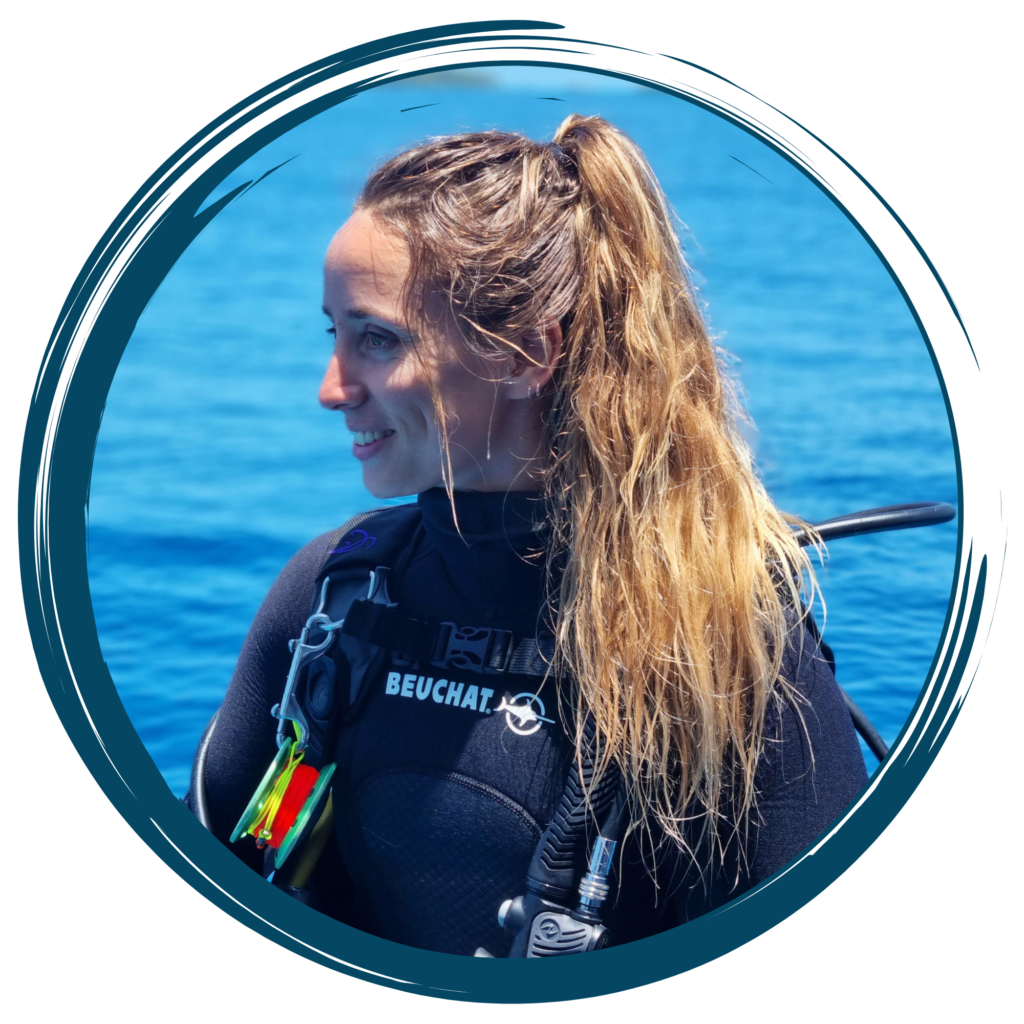
Margaux
A marine biology graduate, professional diver and underwater cameraman, Margaux has built up her experience of diving with sharks all over the world!
She is a naturalist guide and shark seminar leader, specializing in human-shark interactions, and accompanies groups of divers on shark encounters in a dozen different destinations.
She has made over a thousand dives with sharks, including several hundred hours with top predators such as tiger, bull and oceanic sharks, making her one of the most experienced divers of her generation.
She is one of the few divers to have practised tonic immobility on sharks: the first woman in the world to have achieved this in South Africa using the Walter Bernardis technique.
She fights to promote quality ecotourism around sharks by involving local communities.
Anthony
A dive instructor, naturalist and expedition guide with extensive experience at sea, he specializes in creating enriching encounters with the ocean and its most emblematic species. His work is rooted not only in adventure, but also in education and conservation.
Over the years, he has guided divers through some of the world’s most extraordinary marine environments, from the coral reefs of the Maldives to the volcanic seamounts of the Azores and the richly biodiverse waters of the East African coast.
As a multilingual naturalist (French, Italian, English, Spanish), he brings a unique perspective to every dive, helping divers combine the pleasure of exploration with a better understanding of marine life, ocean dynamics and conservation issues.
Its aim is not only to offer safe, unforgettable experiences, but also to develop respect and responsibility for the ocean.
Avis clients
Je pensais venir pour voir des requins. Je suis repartie en ayant appris à les comprendre. Margaux ne vend pas juste une plongée, elle transmet une vraie lecture du comportement animal. Son calme est contagieux et on se sent immédiatement en sécurité. Le workshop de science participative a complètement changé ma façon de plonger.
Camille A.
J’ai rencontré Margaux et Anthony sur une croisière en Égypte. Le courant est très vite bien passé avec eux et leur groupe ! 2 jeunes plongeurs passionnés et friands de partage ! On plonge en apprenant des choses, j’adore ! Ambiance de groupe extraordinaire, on se refait un liveaboard avec eux et +/- le même groupe ! Foncez et on se croisera sûrement quelque part en leur compagnie !
Charles C.
Sono stato in crociera con Anthony e Margaux e stato una esperienza fantastica. Le conferenze e le immersioni sono state davvero fantastiche. Ho imparato un sacco di cose e ci tornerei con loro per i miei prossimi viaggi. Finite le foto e le immersioni per consumare !
Mario C.
Diving with sharks used to be on my bucket list. Diving with Margaux and Anthony turned into a life perspective shift. Their ability to combine marine biology, conservation, and pure emotion is rare. You don’t feel like a tourist , you feel like part of something meaningful.
Emily P.
Un viaje increíble con Margaux y Anthony. Inmersiones enriquecedoras y charlas súper interesantes donde aprendí muchísimo. Grupo reducido con barco privado. Y al final del viaje, un vídeo de recuerdo superprofesional (sobre y bajo el agua). ¡Inmersiones preciosas, información excelente y muchas risas! Volveré.
Júlia T.
Je n’étais même pas plongeuse au départ, j’accompagnais mon compagnon. Les conférences quotidiennes et les échanges m’ont passionnée. Margaux rend la science accessible, sans jamais la simplifier à outrance. On sent l’engagement derrière chaque mot.
sophie j.
Identifier un requin sur photo, analyser ses cicatrices, ses spécificités, estimer sa taille, comprendre ses déplacements… Je ne pensais pas que je pouvais contribuer à la recherche en tant que plongeur loisir. Margaux nous donne les outils et la confiance pour le faire sérieusement.
Julien R.
En tant que scientifique, je suis exigeante. Ce que j’ai apprécié, c’est la rigueur dans la collecte de données et le respect du protocole, tout en gardant une atmosphère chaleureuse. Son projet d’identification des requins bleus est impressionnant.
Martine S.
I was honestly nervous before my first shark dive. Anthony and Margaux’s briefing changed everything. They explain not only what to do, but why. Understanding the behavior made the fear disappear. A memory I’ll never forget!
Mark A.
Previous slide
Next slide
Contact
Envie de t’inscrire ou besoin d’infos supplémentaires ? Contacte-nous !
Shipping gallery
No photos yet, but already a lot of anticipation: the gallery is just waiting for its first thresher sharks… and you, to be one of them!
ARTICLES to read
Malapascua in the Philippines: the must-do island for pelagic thresher shark diving!
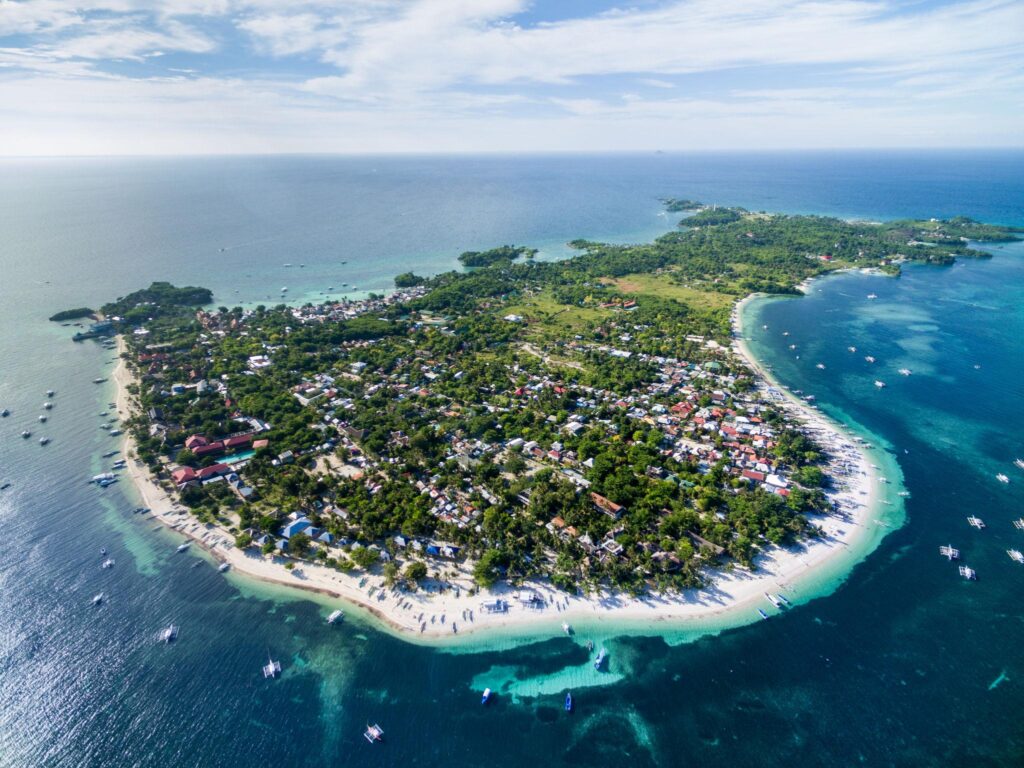
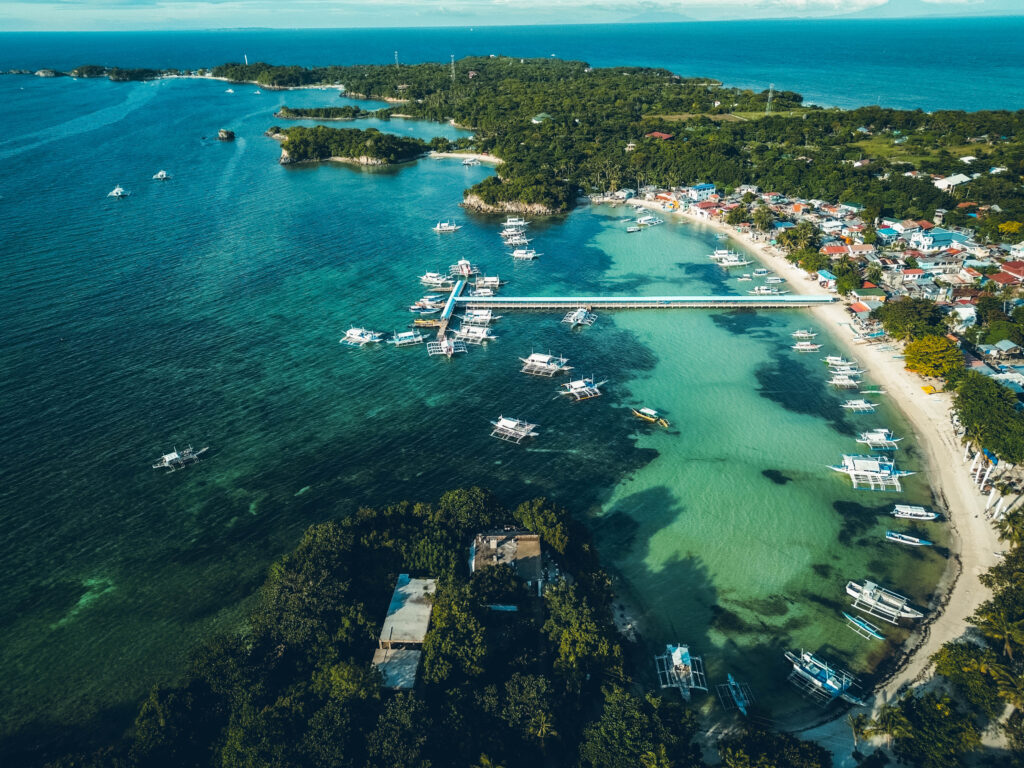
Nestled north of Cebu Island in the Visayas archipelago of the Philippines, Malapascua is one of Asia’s most fascinating diving destinations. This small tropical island has become world-famous for a unique phenomenon: the possibility of regularly observing the pelagic thresher shark while scuba diving.
But there’s more to Malapascua than its spectacular encounters. Today, the island represents an interesting example of dive tourism and marine ecotourism, where the presence of divers contributes to the protection of an emblematic species while supporting the local economy.
With around 5,000 inhabitants, the majority of the population depends directly or indirectly on tourism and scuba diving.
Beyond the diving, Malapascua remains above all a small fishing island with a tranquil rhythm, where you can discover local Filipino life between traditional boats, fish markets and beach restaurants.
Photo: JC Cergneux
Why Malapascua is unique for diving
The Kimud Shoal site, around 45 minutes by boat from the island, is an underwater reef that plays an essential role in the local ecosystem.
Every day, all year round, pelagic thresher sharks come up from the depths to this special site. They come to perform a fascinating behavior: cleaning by labras, which remove parasites and dead skin.
This natural phenomenon offers divers an exceptional opportunity to observe these elegant animals in their natural environment.
Today, diving in Malapascua is considered :
one of the best places in the world to see the pelagic thresher shark
an emblematic destination for shark diving in the Philippines
a major site for underwater photographers and videographers
The island boasts over 20 dive sites, ranging from spectacular drop-offs to reefs rich in tropical macro-fauna.
Ecotourism: a lever for shark protection
Today, thresher sharks are threatened by fishing in many parts of the world. In Malapascua, the development of scuba diving tourism has gradually transformed the perception of these animals.
On this island, thresher sharks are now worth far more alive than caught, and the income generated by diving tourism directly supports :
local dive centers
accommodation and restaurants
jobs in the local community
tourist activities around the island
This transition to marine ecotourism shows how responsible wildlife watching can become a sustainable economic driver.
Photo: JC Cergneux
Photos: JC Cergneux
Watching thresher sharks responsibly
Malapascua’s growing popularity also brings with it a great responsibility. To protect these sensitive animals, certain rules must be observed.
That’s why, since February 2026, Kimud Shoal has been officially declared a Marine Protected Area and ecotourism zone by the local authorities of Tabango, in the province of Leyte.
This means that new rules have to be put in place to ensure the long-term protection of the dive site and the marine life that thrives there.
What has changed
environmental tax of PHP 300 (approx. €5) per diver
ban on certain equipment: hooks, pointers, gloves, selfie poles over 1.5 m long
compulsory presence of an instructor or Divemaster for Open Water divers with less than 50 dives
compulsory buoyancy workshop for divers with less than 50 dives
ban on TSD and Open Water courses
ban on snorkeling and freediving
underwater photography and video light and flash ban
The essential rules remain the same, of course:
keep a respectful distance from sharks
avoid sudden movements
maintain excellent buoyancy
never chase animals
do not touch or take anything
Responsible diving minimizes stress on sharks and preserves the fragile balance of this unique ecosystem.
Malapascua, a tropical island full of surprises
Although diving remains the main activity, Malapascua offers much more than just its seabed.
The island is small, around 2 km long, and can easily be explored on foot in a few hours.
Experiences not to be missed:
Bounty Beach: the heart of the island
Bounty Beach is Malapascua’s main beach. Lined with palm trees and dive centers, it’s the starting point for sunrise boat dives with thresher sharks.
In the evening, the atmosphere becomes more relaxed, with beach restaurants, live music and sunsets over the Visayas Sea.
Langub Beach: the wild beach
Located in the north of the island, Langub Beach is often considered Malapascua’s most beautiful beach. With its white sand and coconut palms, it offers a much wilder and quieter atmosphere than Bounty Beach.
Explore the island and its villages
Malapascua can also be discovered by strolling through its small villages. There are no cars here: you can get around on foot or by habal-habal, the local motorcycle cabs.
It’s an opportunity to observe daily life:
fishermen returning at sunrise
children playing basketball in the villages
lively local evening markets
Malapascua night market
Every evening, the local market becomes a veritable festival of flavors: grilled meats, fresh fish, shrimps or cicadas. It’s the ideal place to sample Filipino cuisine in an authentic atmosphere.
Island hopping: Kalanggaman
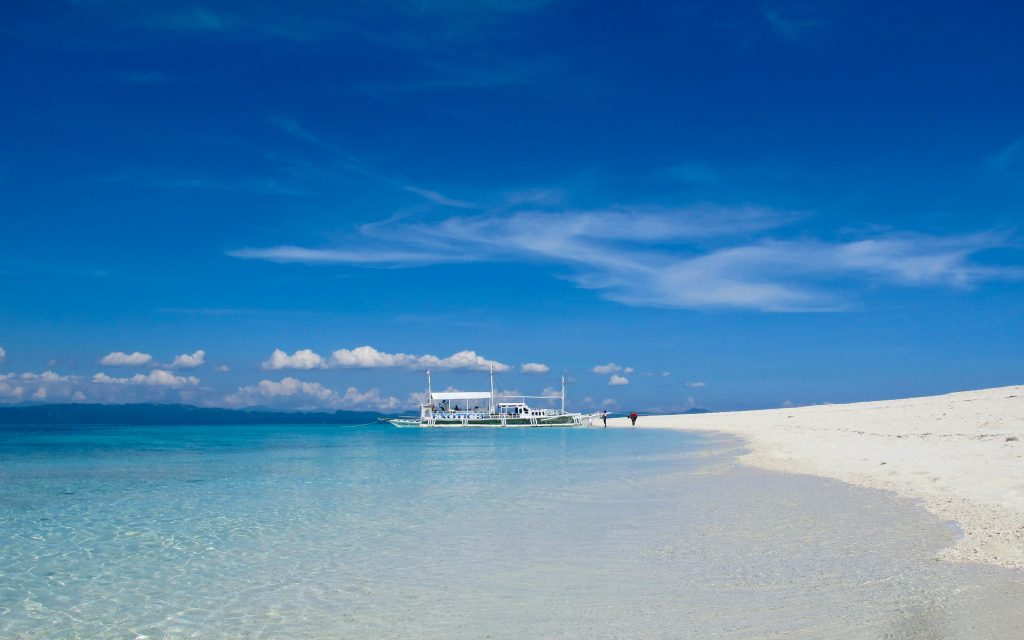
From Malapascua, you can take a day trip to Kalanggaman Island, famous for its spectacular white sandbar in the middle of the ocean.
This excursion is one of the most popular in the Visayas.
A mythical destination for ocean enthusiasts
Between diving with thresher sharks, tropical beaches and immersion in local Filipino life, Malapascua is a unique destination.
For lovers of the ocean, scuba diving and nature, this small Philippine island remains one of the most extraordinary places in the world to observe sharks in their natural environment.
It’s also a place where everyone can make their own contribution to protecting the oceans.
And it’s precisely in this spirit that these participatory science workshops have been created, making it possible to combine business with pleasure.
The pelagic thresher shark: the shark with the ocean’s most spectacular caudal fin
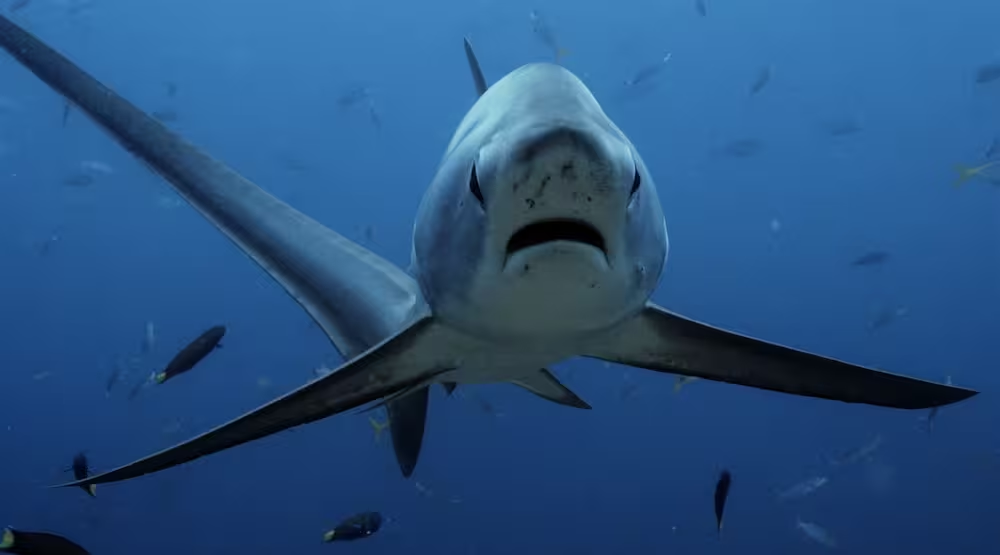
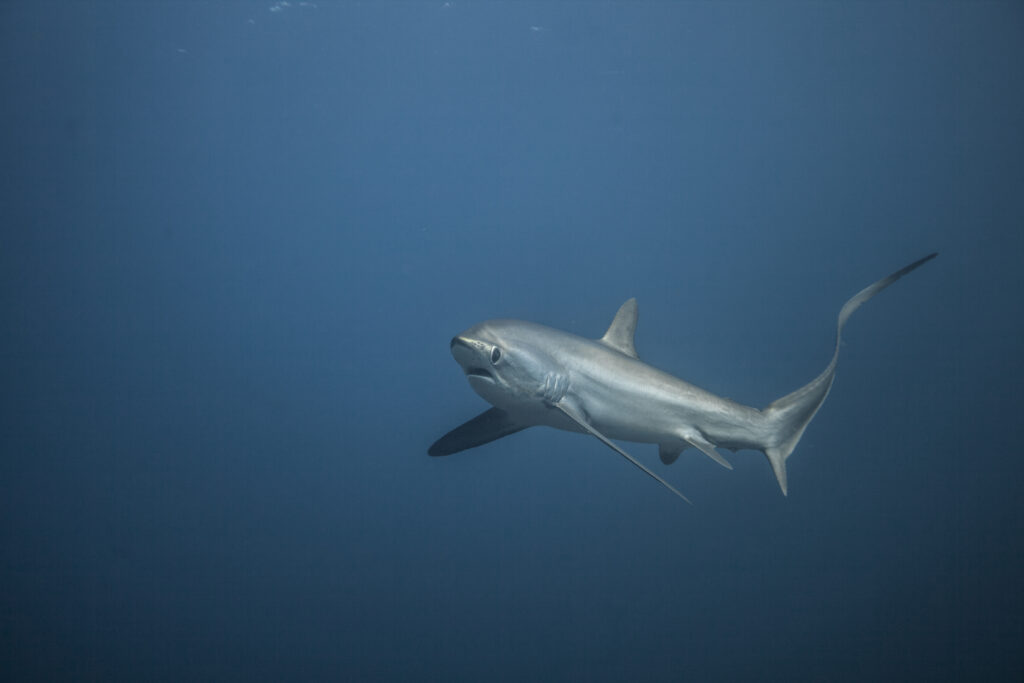
The pelagic thresher shark (Alopias pelagicus) is one of the ocean’s most fascinating sharks. Easily recognized by its incredibly long caudal fin, it is one of the most sought-after shark species for divers and underwater photographers.
In the Philippines, on the island of Malapascua, it is possible to observe this mythical shark on a daily basis, making it one of the few destinations in the world offering such an opportunity.
How to identify it
There are 3 species of thresher shark, so be careful not to get confused!
Common thresher shark (Alopias vulpinus)
The big-eyed thresher shark (Alopias superciliosus)
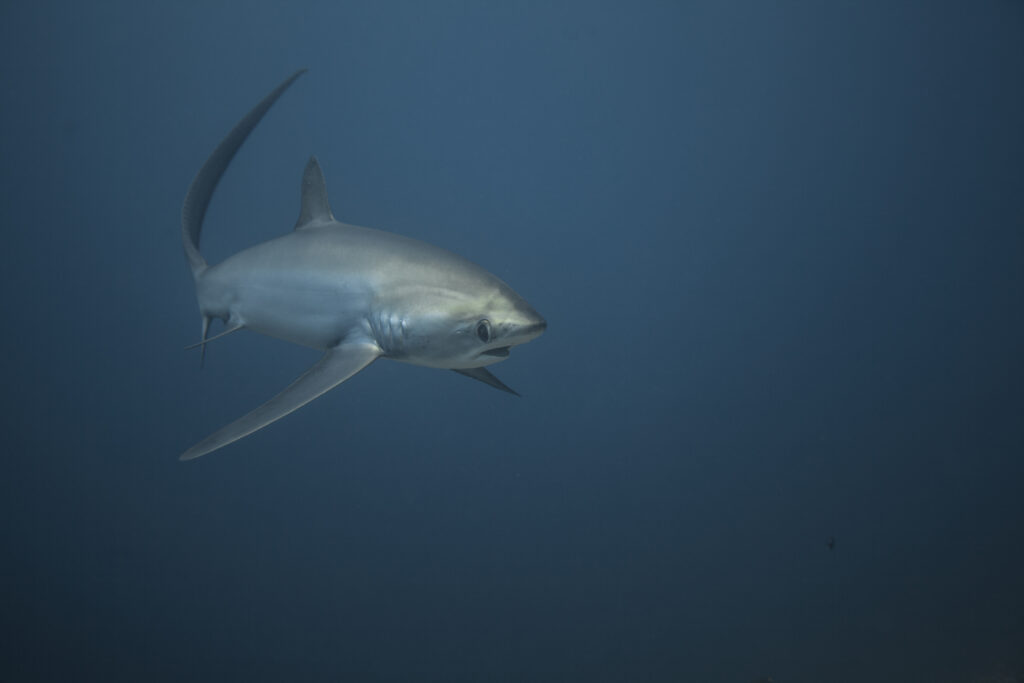
Pelagic thresher shark (Alopias pelagicus)
Photo: JC Cergneux
The common thresher shark – the largest
Very rare to observe while scuba diving (no live encounters have been recorded to date), it is more likely to be seen and/or caught by accident by fishermen.
Identification keys :
Sizes ranging from 4 to 6 metres and possibly more (6.35m), this is the largest species of thresher shark.
Colors: the back is blue-gray to gray-brown, with a white patch on the flanks, rising above the base of the pectoral fins on each side, and a white belly.
Spindle-shaped body
Very long upper caudal fin lobe, almost as large as its body
Conical snout
Small eyes for the size of his body
Small mouth
Long pectoral fins
First dorsal fin is high and positioned about halfway up the body
Second dorsal fin very small
It can be found in the Atlantic, Pacific and Indian Oceans, in tropical to cold and temperate waters. From coastal to offshore areas, from the sea surface to depths of around 400 m.
Common thresher shark – Alopias vulpinus
The big-eye thresher shark – The most massive head
Also rare to see, it stands out from the other two!
Identification keys :
Sizes from 2.50 to approx. 4.80 metres
Colors: grayish-purple to grayish-brown on the back, light gray to white on the belly
Spindle-shaped body
Very long upper caudal fin lobe, almost as large as its body
Big eyes
Almost flat-topped head
Deep horizontal groove above the gills, extending to above the eyes
Long, narrow pectoral fins
First dorsal fin high, well behind pectoral fins, slightly in front of pelvic fins
Second dorsal fin very small
It can be found in the Pacific, Atlantic and Indian oceans, in tropical and temperate seas, close to the coast or in the open sea, from the surface to a depth of around 1000m.
Big-eye thresher shark – Alopias superciliosus
The pelagic thresher shark – the one you see on dives
The most famous and the one we’re lucky enough to see on dives in many parts of the world!
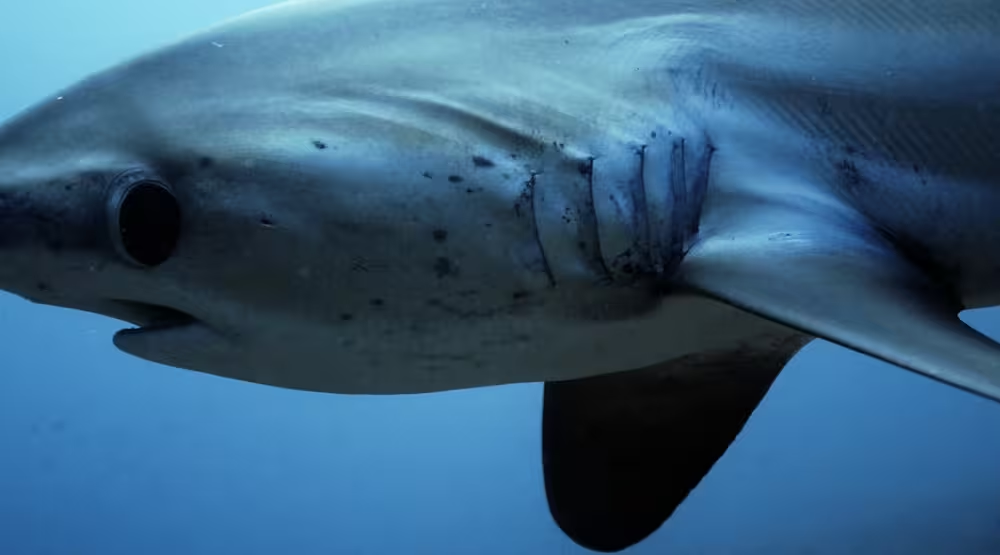
Identification keys :
Sizes from 2.60 to 4.30 metres
Colors: the back is blue-grey to brown-grey, tending towards silver or slightly iridescent reflections, white on the belly.
Spindle-shaped body
Very long upper caudal fin lobe, almost as large as its body
Big eyes
Small conical snout
Small mouth
Long pectoral fins
Small first dorsal fin in relation to the body
Second dorsal fin very small
Found in the warm tropical and subtropical waters of the Indo-Pacific. A priori absent from the Atlantic Ocean. Oceanic, widely distributed, generally offshore, sometimes near coasts on a continental shelf, from 0 to 300 m. Sometimes found near coral reefs, drop-offs and seamounts.
Pelagic thresher shark – Alopias pelagicus
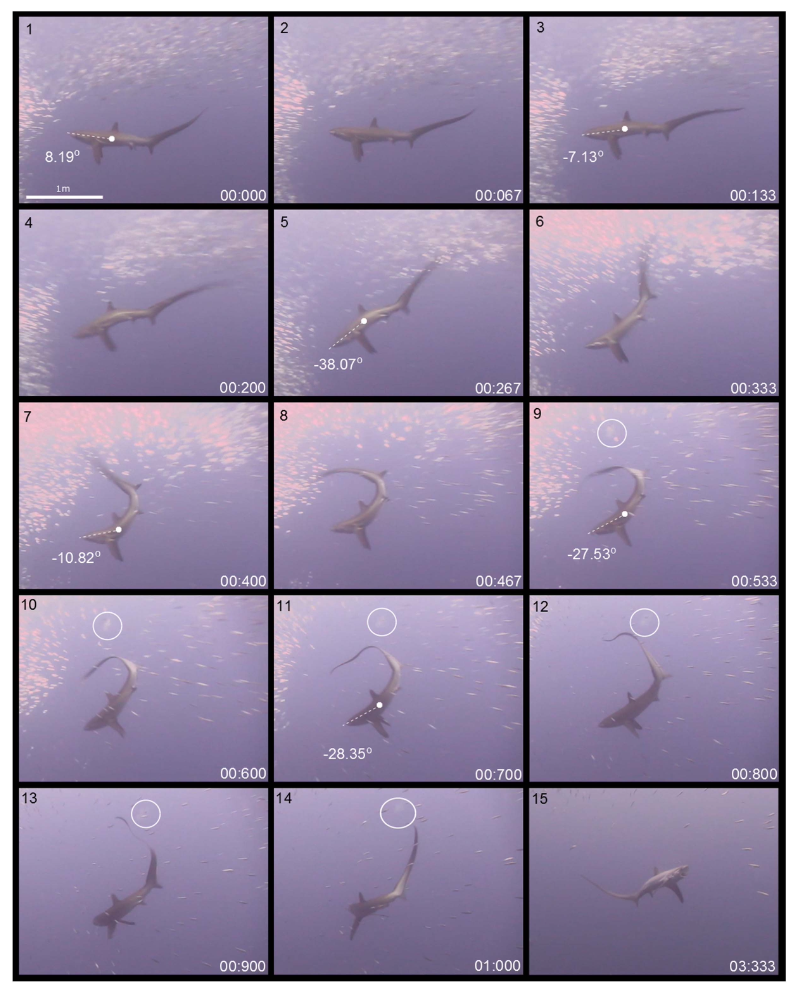
A series of still images from a tail-slap hunting scene seen from above – “Thresher Sharks Use Tail-Slaps as a Hunting Strategy” Simon P. Oliver, John R. Turner, Klemens Gann, Medel Silvosa, Tim D’Urban Jackson
An impressive hunting tool
Thresher shark species are known to use the upper lobe of their caudal fins like a whip to hunt.
The hunting phases include preparation, attack, recovery and retrieval of the prey, which follow one another in sequence. The preparation phases are considerably longer than the others, no doubt to give the shark time to build up momentum before launching its caudal stroke.
When attacking, it folds its pectoral fins slightly, altering its position in the water. This allows him to project his tail forward with great speed.
The blow is extremely powerful. It can stun or even knock out several fish at once.
In some cases, the force of the movement is such that it can even create small bubbles in the water.
Once the fish have been disorientated, the shark simply returns to retrieve them. This allows the shark to catch several prey in a single attack, making it a highly effective hunting technique.
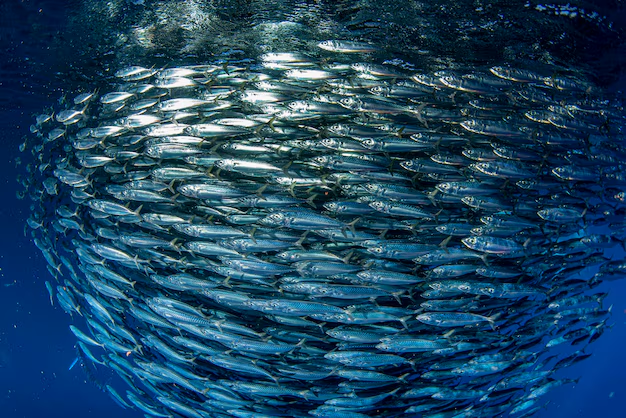
This behavior works particularly well on schools of fish, such as sardines.
The thresher shark can hunt both day and night, depending on opportunities. But this strategy also makes it more vulnerable to fishing.
Its morphology, notably its long tail and flippers, is perfectly adapted to this technique. Everything indicates that this ability has evolved specifically to enable it to hunt in this way.
What do they feed on?
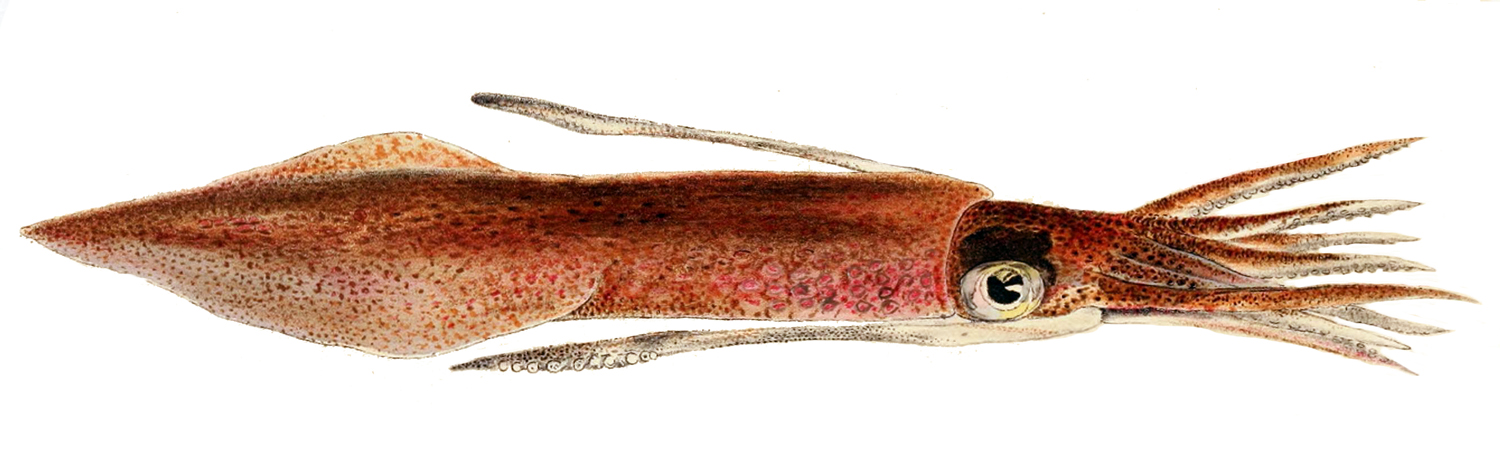
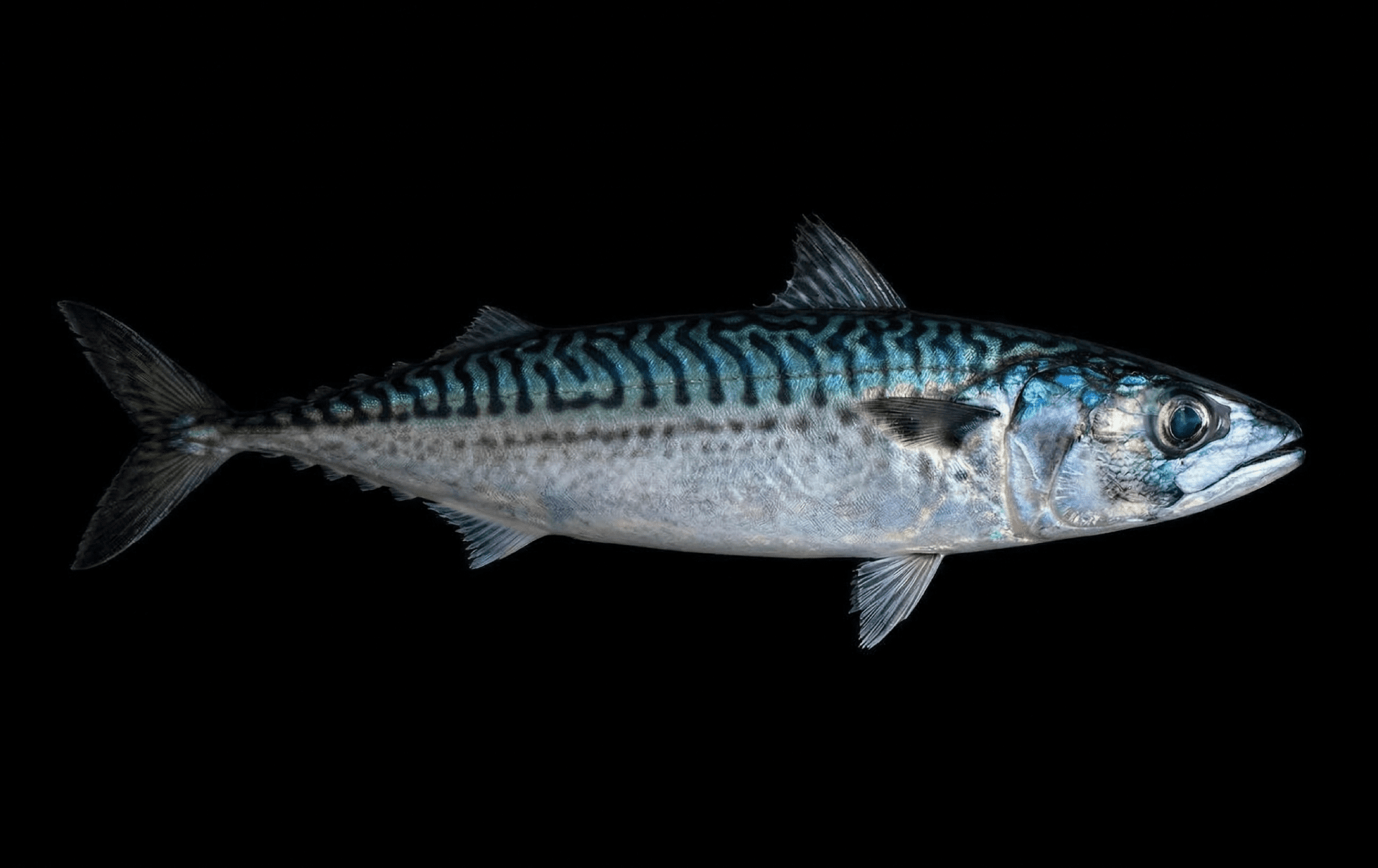
Thresher sharks feed on small to medium-sized gregarious fish and pelagic invertebrates such as squid.
The common thresher shark feeds on a variety of small schooling species such as anchovy, hake, mackerel, sardines and squid (Gubanov, 1972; Stick and Hreha, 1989; Bedford, 1992; Preti et al., 2001).
The large-eyed thresher shark is known to feed on hake, squid, Scombridae, Alepisauridae, Clupeidae, Istiophoridae and elasmobranchs (Fitch and Craig, 1964; Bass et al., 1975; Stillwell and Casey, 1976; Gruber and Compagno, 1981). The results of acoustic telemetry monitoring in the eastern Pacific suggest diurnal vertical migration and predominantly nocturnal feeding in this species, particularly in the thermocline zone.
The pelagic thresher shark also feeds on small schooling fish and squid (Compagno, 1984).
Like other pelagic sharks, thresher sharks have a rete mirabile system that allows them to maintain a body temperature higher than that of the surrounding water (Carey et al., 1985; Goldman, 2005), enabling them to take advantage of a wide range of feeding opportunities.
Learn more about the thresher shark… join the adventure!
How about moving from the theoretical to the practical?
I could go on for pages and pages about the thresher shark… but nothing will ever replace the moment when you see it appear in the blue and the conferences with your feet in the sand!
Because at the end of the day, understanding a species isn’t just about reading about it. It’s about observing it. Feeling it. Learning to position yourself, to breathe, to slow down… and to be part of the moment.
That’s exactly why I created these citizen science workshops in Malapascua.
👉 Here, you don’t just come to “see a shark”. You learn to observe it responsibly, to understand its behavior, and to contribute concretely to its protection.
Each dive becomes an intense, useful and profoundly different experience.
If you want to experience more than just a diving trip… If you want to give meaning to your underwater encounters…